

Why Retailers Need Shaver Parts Stock More Than Ever in 2026

Why Retailers Need Shaver Parts Stock More Than Ever in 2026
The global shavers market is growing fast, and that growth creates a downstream demand that many retailers are still ignoring: replacement parts. The shavers market will grow from $29.74 billion in 2025 to $31.62 billion in 2026, at a compound annual growth rate of 6.3%. Every shaver sold adds to an installed base of devices that will need foils, cutters, batteries, and charging leads replaced on a predictable cycle. For retailers who stock those parts, that growing installed base is a recurring revenue engine. For those who do not, it is a steady stream of customers walking to a competitor.
The case for stocking shaver parts has been building for several years. Rising consumer interest in repair over replacement, fresh legislative pressure from Europe, and the premium grooming boom in the UK are all pointing in the same direction. Retailers who act on this in 2026 will be in a strong position. Those who wait will find the shelf space already taken.
Key Takeaways
- The market is growing fast and generating parts demand: UK men’s grooming sales increased by 6% in current value terms in 2025, reaching £2.3 billion, more shavers in use means more replacement cycles for retailers to capture. If your shelves do not reflect this growth, please check your parts range as soon as possible.
- Replacement cycles are short and predictable: Most people should replace the foil or cutting head of an electric shaver every 12 to 18 months, making parts one of the most foreseeable repeat-purchase categories in personal care. Build your buying calendar around this rhythm.
- Stockouts destroy customer loyalty: The average retailer loses 4% of sales to out-of-stock items, and 9% of customers permanently switch to a competitor after a single stockout experience. With shaver parts, that lost customer is also a lost annual repeat buyer.
- Repair culture is rising: Deloitte found that 56% of UK consumers had repaired a product instead of replacing it, 60% considered reparability or durability when purchasing, and 75% would consider using a repair service. Stock the right parts and position your store as the local repair destination.
- Legislative tailwinds are real: From 31 July 2026, new obligations under EU Directive 2024/1799 take effect across the European Union, designed to ensure consumers have access to products that last longer. Consumer awareness of repairability is about to increase significantly.
Quick-Start Prioritisation Framework
| Strategy | Best For | Effort Level | Time to Results |
|---|---|---|---|
| Stock top-brand foil and cutter sets | All retailers with any grooming range | Low | Days |
| Add replacement chargers and leads | Independents with existing shaver sales | Low | Days |
| Build a 12-18 month replenishment cycle | Established grooming specialists | Medium | Weeks |
| Expand to full brand coverage (Braun, Philips, Remington) | Retailers seeking repeat customer loyalty | Medium | Weeks |
| Create bundled new-shaver + parts starter packs | Gift-season and premium positioning | High | Months |
Start here if you are:
- A small independent: Add foil and cutter sets for the two or three shaver brands you already sell, lowest effort, fastest return on shelf space.
- A multi-brand grooming retailer: Build a replenishment calendar around the 12-18 month replacement cycle; align buying with the brands your customers actually own.
- An online or omnichannel retailer: Prioritise stockout prevention on your highest-velocity parts SKUs; a single stockout in this category costs you a repeat buyer.
The UK Grooming Boom Is Generating Parts Demand
A Market That Never Stops Producing Replacement Needs
UK men’s grooming demonstrated notable momentum in 2025, with current value growth of 6% to reach sales of £2.3 billion, in an environment that remains attractive due to a growing consumer base, premiumisation in fragrances and robust adoption of digital-first retail. This is the foundation of the parts opportunity. Every premium shaver sold in that market represents at least one guaranteed parts purchase within 18 months.
The rise of organised retail and online marketplaces amplifies this trend, as consumers can easily explore, compare, and repurchase blades, cartridges, and grooming accessories. Philips India reported more than 75% growth in its premium grooming segment in 2025, illustrating how appetite for higher-end devices, which carry longer replacement cycles and more valuable parts, is rising globally.
Pro tip: Track which shaver brands are selling fastest in your area and stock replacement parts for those models specifically. A customer who bought a Braun Series 5 eighteen months ago is statistically due a foil and cutter replacement right now.
The Installed Base Logic
Unlike pure disposables, electric shaver sets involve an upfront device purchase followed by recurring expenditure on replacement blade heads, cleaning cartridges, and battery servicing. This hybrid consumption model gives the market resilience across economic cycles: device sales fluctuate with discretionary spending, but blade replacement demand provides a stable revenue floor for brands and retailers. That stable floor is exactly what independent retailers need in a pressured environment, a category that sells regardless of whether consumers are feeling flush or cautious.
The replacement cycle for shaver parts is predictable and unavoidable, which makes this category unlike most of personal care. Consumers do not choose whether to replace a worn foil any more than they choose whether to replace a car tyre. They simply need to, and the retailer who stocks the right part at the right moment wins the sale.
The Repair Revolution Is Your Retail Opportunity
Consumer Behaviour Is Shifting Away From Waste
The cultural direction of travel in the UK is clear. Research published in October 2025 found that 48% of UK consumers say they are more likely to seek businesses that offer repair, refill or recycling services than they were a year ago, with Brits saving on average £100 or more last year by having items professionally repaired rather than replacing them. A grooming retailer that stocks shaver parts positions itself as that preferred repair-supporting business, and builds loyalty in the process.
The numbers from Deloitte reinforce this trend. When asked about actions taken in the past 12 months to pursue a more sustainable lifestyle, the majority of consumers reported recycling household waste, reducing food waste, and limiting single-use plastics. A further 56% had fixed or repaired a product rather than replacing it. Retailers who stock parts align with this growing consumer value, and those who do not miss a loyalty-building moment.
Why Shaver Parts Sit at the Centre of the Repair Conversation
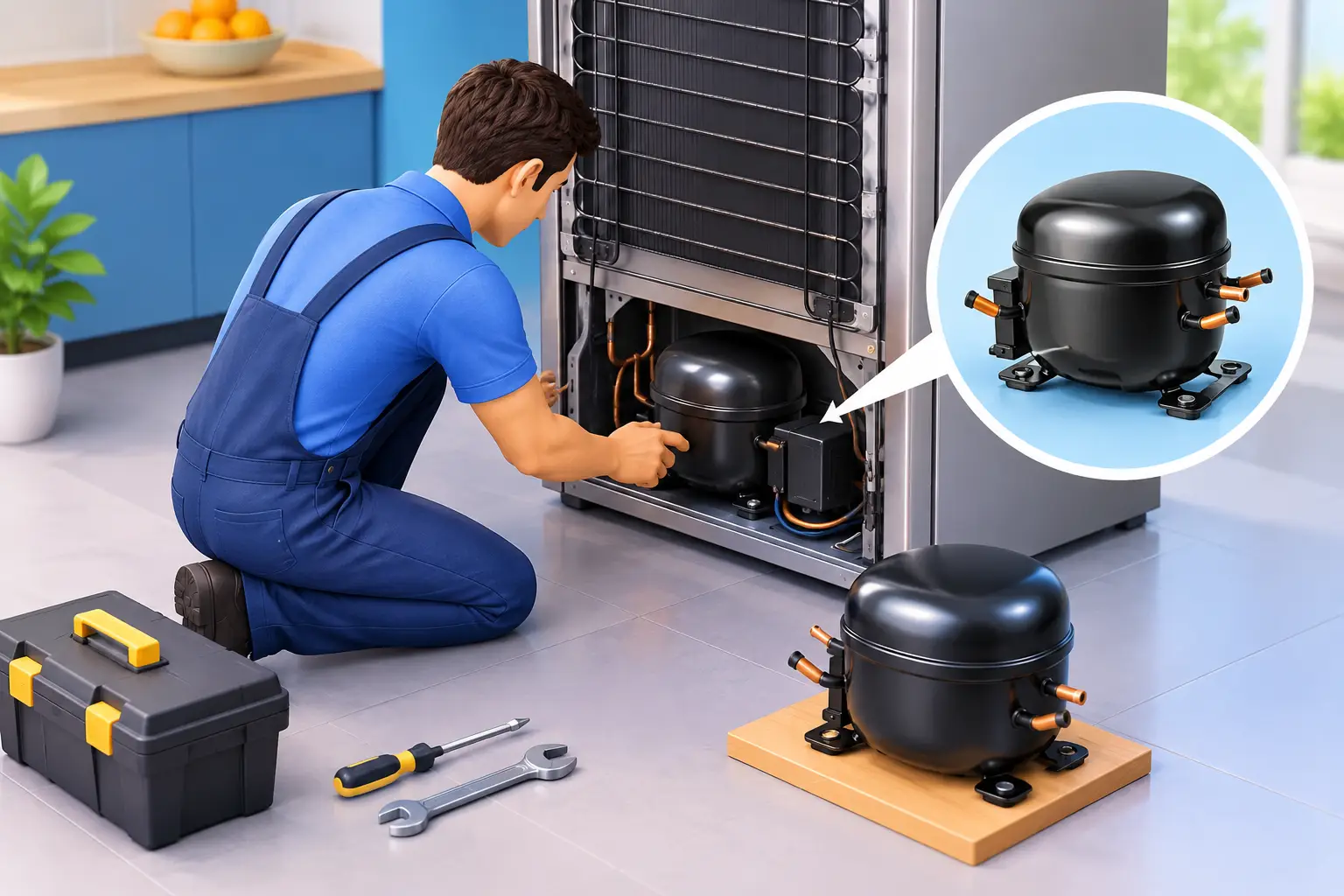
Choosing to replace the whole shaver rather than the cassette means paying four to six times more for an outcome, a sharp, smooth shave, that a replacement part would have delivered on its own. Consumers are starting to understand this calculation, and when they do, they look for a convenient local or online source of parts. If your store is that source, you earn not just the parts sale but the customer’s trust.
Restrictive practices by some manufacturers, such as limiting access to spare parts and authorised repair providers, are making repair options unaffordable and not feasible for consumers. Independent retailers who actively stock a broad range of parts fill the gap that manufacturer restrictions create. This is a genuine commercial opening.
Pro tip: Display shaver replacement parts near new shavers on the shop floor or in the same online product category. The customer deciding between a new shaver and a replacement part will often choose the part when it is easy to find and competitively priced.

The Legislative Landscape Is Creating Urgency
EU Right to Repair Changes Consumer Expectations
The EU Right to Repair Directive effective July 2024, mandates manufacturers to offer repairs, extend warranties, and ensure spare parts availability for up to 10 years. In June 2024, the EU adopted its groundbreaking Right to Repair Directive (EU) 2024/1799, designed to empower consumers, extend product lifespans, and reduce e-waste.
The EU Right to Repair Directive offer post-warranty repairs for many consumer goods sold in the EU, with annual expansion of product categories expected. Even though From 31 July 2026, new obligations not apply directly in the UK, the directive is already reshaping consumer expectations. Shoppers are increasingly aware of their repair rights, more likely to seek parts, and more critical of retailers who cannot supply them.
An overwhelming 89% of people believe manufacturers should be required to allow third-party businesses to refurbish and repair electronic products, rather than restricting repairs to their own approved providers. Retailers who stock third-party-compatible parts are aligned with what consumers actually want, and are likely to benefit as that expectation hardens into policy.
What This Means for Your Parts Strategy
The practical implication is straightforward: consumer demand for accessible, affordable shaver parts is rising, and legislation is accelerating awareness of that demand. The directive amends EU sale-of-goods rules so that consumers receive an additional one-year legal guarantee when they choose repair over replacement under their statutory rights. As repair becomes a culturally reinforced behaviour, the retailer with parts in stock becomes the retailer consumers trust.
Stockouts in This Category Are Expensive Mistakes
The Cost of an Empty Shelf in the Parts Aisle
Shaver parts are a low-consideration, high-urgency purchase. When a customer’s foil wears out, they want a replacement within days, not weeks. Nearly 69% of online shoppers will abandon their purchase and shop with a competitor if their desired item is out of stock, leading to direct sales losses and potential long-term customer value erosion. In a category with annual replacement cycles, that defecting customer is worth multiple future transactions, not just the one you just lost.
The average retailer loses 4% of sales to out-of-stock items, and 9% of customers permanently switch to a competitor after a single stockout experience, with 55% switching after multiple occurrences. For a retailer generating £500,000 per year in grooming sales, a 4% stockout rate equates to £20,000 in lost revenue, before you count the lifetime value of the customers who left for good.
Building a Replenishment Rhythm That Prevents Stockouts
The more profitable approach is to identify the four or five best-selling shaver models in your area and maintain standing stock of their replacement parts, reordering on a 12 to 18 month forward-planning cycle that mirrors the manufacturer-recommended replacement intervals. This approach converts an ad-hoc restocking task into a systematic buying practice, and dramatically reduces the risk of a customer arriving for a foil and finding empty space.
In practice, the replenishment cycle aligns naturally with the product replacement schedule. Remington’s guidance for foil shavers recommends replacing foil and cutter blades every 6 to 12 months for optimal performance, which means a well-stocked retailer can confidently plan buying quarters around predictable demand rather than reacting to stockouts after the fact.
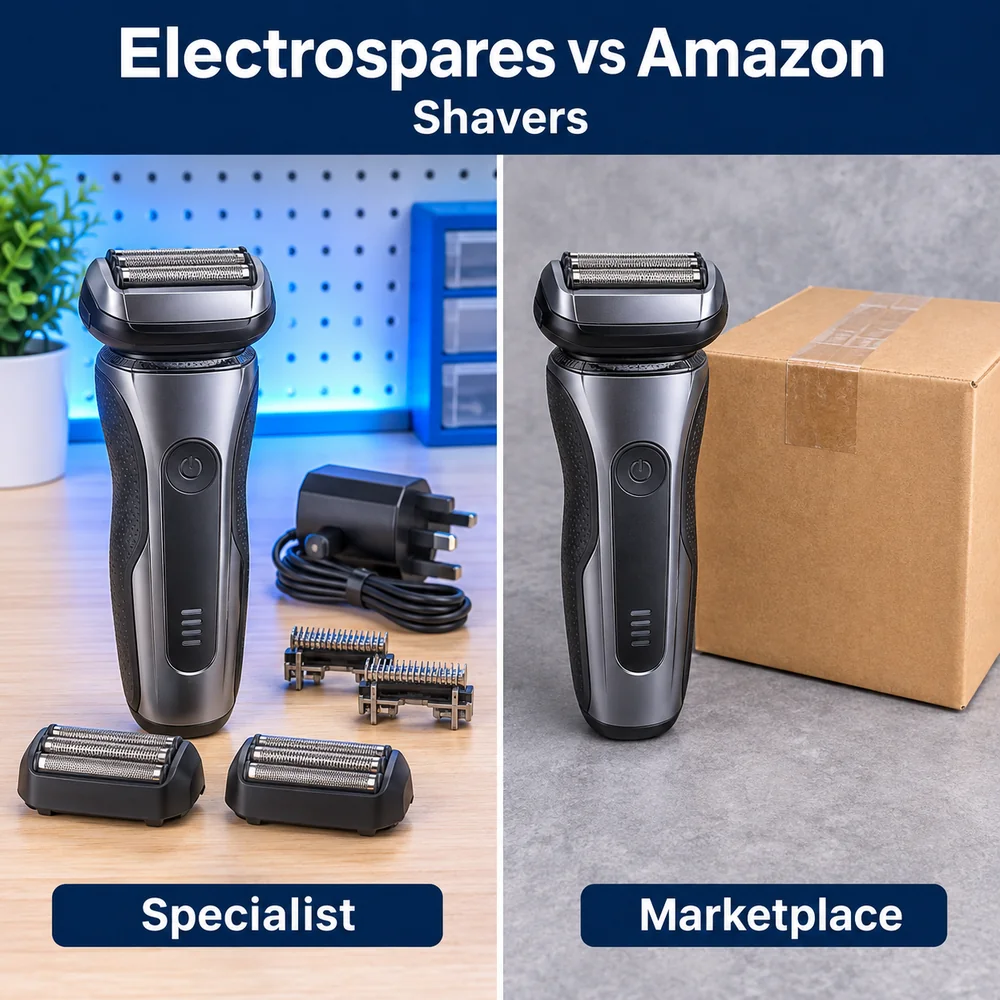
Pro tip: Set a low-stock alert for your top five parts SKUs. When stock drops below a two-month buffer, place a replenishment order. Specialist suppliers like Electrospares.Net Ltd stock a comprehensive range covering all major brands, foils, cutter blades, rotary heads, cleaning cartridges, chargers, and lubricant oils, making it straightforward to source across Braun, Philips, and Remington in a single order.
Margin and Mix: Why Parts Are Worth Prioritising
Higher Relative Margins on Consumables
Margins on replacement heads are typically two to three times higher than margins on complete shaver units. This is the structural advantage of aftermarket consumables: the product is small, the customer need is time-sensitive, the purchase decision is fast, and the margin percentage is significantly better than on the original hardware. Stocking shaver parts is not just about serving existing customers; it is about improving the category’s overall margin profile.
Aftermarket parts are often 30 to 50% cheaper than OEM equivalents, which creates a range decision for retailers: carry OEM parts for customers who insist on the genuine article, and quality-rated aftermarket options for the price-sensitive majority. Both can sit on the same shelf and address different customer types without cannibalising one another.
The Subscription and Subscription-Adjacent Opportunity
Subscription blade-replacement services are emerging business models, with nearly 14% of electric shaver purchasers in developed markets opting into subscription programmes in 2025. Even if your operation does not support a formal subscription, this behavioural data signals that a meaningful segment of customers wants a predictable, low-friction way to replenish parts. A simple reminder programme, an email at the 12-month mark post-purchase, or a shelf card prompting seasonal replacement, can replicate that dynamic without the technical overhead.

Common Mistakes Retailers Make With Shaver Parts
Stocking Too Narrow a Range
The most common error I have seen is retailers stocking replacement parts for only one brand, or only the current generation of a popular model. Braun and Philips typically stock replacement heads for five-plus years after a model launches, but once a shaver is discontinued, finding authentic parts becomes a gamble. Customers with slightly older shavers, precisely the customers most motivated to repair rather than replace, are frequently left without options. Widening your range to include parts for models two to four years old captures this underserved and loyal cohort.
Treating Parts as an Afterthought
In my experience, the retailers who perform best in this category treat parts as a primary category rather than a support range. That means dedicated shelf space, clear signposting (by brand and model), and pricing that reflects the genuine value delivered rather than a grudging afterthought markup. The customer who successfully finds a foil for their Braun Series 7 remembers where they found it and returns. The customer who cannot find it goes elsewhere, permanently.
Ignoring the Full Parts Ecosystem
Foils and cutters are the headline items, but a dead charging lead is one of the most wasteful reasons to replace a shaver, yet it happens constantly. Stocking replacement chargers, cleaning brushes, lubricant oils, and cleaning cartridges broadens the revenue opportunity from each customer visit and positions your store as the genuinely comprehensive solution. A customer who finds everything they need in one place is a customer you have kept.
Frequently Asked Questions
How often do electric shaver parts need to be replaced?
Most people should replace the foil or cutting head of an electric shaver every 12 to 18 months, though daily shavers with coarse hair often need a new head closer to the 9 to 12 month mark, while occasional users with fine hair can sometimes stretch the same head past 24 months without a noticeable drop in performance. As a retailer, planning stock replenishment around the 12-month interval gives you the safest buffer.
Is it worth stocking parts for older shaver models?
Absolutely. The motor and lithium-ion battery inside a quality electric shaver can easily last six to eight years before the battery stops holding a charge. This creates a decision point that many users miss: a shaver is not dead just because the blades are dull. Customers with five-year-old premium shavers are prime candidates for a foil and cutter replacement, and they are specifically looking for a retailer who understands their model.
What shaver brands should UK retailers prioritise for parts?
Braun, Philips, and Remington account for the dominant share of the UK electric shaver market. Starting with foil and cutter sets for the mid-range models from these three brands covers the vast majority of your likely customer base. Specialists such as Electrospares.Net Ltd stock compatible parts across all three, simplifying the sourcing process for independent retailers.
How does stocking shaver parts help with sustainability messaging?
The UK now produces 24kg of e-waste per person annually, making it the second-worst offender globally, behind Norway. A retailer who actively helps customers repair and extend the life of their shavers is contributing to reducing that figure and can communicate that credibly to sustainability-conscious shoppers. It is a genuine differentiator that large chains typically do not exploit effectively.
What is the risk of overstocking shaver parts?
The risk is low compared with fashion or seasonal categories because replacement parts remain relevant as they match the installed base of devices already in customers’ homes. Replacement blade and head sales will grow in line with the installed base, providing a resilient revenue stream that buffers device-market cyclicality. The main risk is stocking parts for a model that has been discontinued without sufficient residual customer base; mitigate this by reviewing your range annually against current sales data.
The Bottom Line for Retailers in 2026
The case for stocking shaver parts is not complicated. A market growing at 6% annually is placing more shavers into more hands. Those shavers need parts replaced every 12 to 18 months. Consumer culture is shifting towards repair. Legislation is raising awareness of repairability. And stockouts in this category cost you repeat customers. Every one of those forces points towards the same action: build a deliberate, well-structured shaver parts range before your competitors do.
For UK retailers looking for a reliable, broad-range supplier covering Braun, Philips, Remington, and other major brands, Electrospares.Net Ltd offers a comprehensive catalogue of foils, cutter blades, rotary heads, cleaning cartridges, chargers, and lubricating oils, designed specifically to support independent and specialist retailers with the stock they need to serve this growing market.
Sources
- Shavers Market Report 2026, The Business Research Company. Global shavers market size and CAGR data 2025-2030. https://www.thebusinessresearchcompany.com/report/shavers-global-market-report
- Men’s Grooming in the United Kingdom, Euromonitor International / MarketResearch.com. UK men’s grooming sales growth to £2.3 billion in 2025. UK men’s grooming sales increased
- Electric Shavers Market Size, Share, Fortune Business Insights. Global electric shavers market data 2025-2034. https://www.fortunebusinessinsights.com/electric-shavers-market-113189
- How Often to Replace an Electric Shaver, Aisen Appliance. Foil and cutter replacement timeline guide. https://www.aisenappliance.com/news/industry-news/how-often-to-replace-an-electric-shaver-the-complete-timeline.html
- The EU Right to Repair Directive, SHMA Solicitors. What UK manufacturers and supply chains need to know. The EU Right to Repair Directive
- Incoming EU Right to Repair Requirements, Fieldfisher. Key things every global manufacturer and retailer should know. From 31 July 2026, new obligations
- The Sustainable Consumer, Deloitte UK. Consumer repair and sustainability behaviour data. https://www.deloitte.com/uk/en/Industries/consumer/perspectives/the-sustainable-consumer.html
- UK Sustainable Shopping Statistics, Why Matters. Deloitte repair statistics and WRAP data. https://whymatters.co.uk/blog/sustainable-shopping-statistics
- Repurpose, Reuse, Less Waste, SME Business News. UK consumer repair behaviour survey, October 2025. https://smebusinessnews.co.uk/2025/10/17/repurpose-reuse-less-waste/
- High Repair Costs Contributing to Global E-Waste Crisis, The Manufacturer. Trojan Electronics report on repair barriers and consumer demand. https://www.themanufacturer.com/articles/high-repair-costs-contributing-to-global-e-waste-crisis-new-report-finds/
- Inventory Stock-out Rate Statistics, Opensend. Global retail stockout cost data. https://www.opensend.com/post/inventory-stock-out-rate-statistics-ecommerce
- Inventory Carrying Cost Benchmarks 2026, AisleStock. Stockout statistics and customer defection data. https://aislestock.com/
- Why Independent Grooming Retailers Are Switching to Electrospares, Electrospares.Net Ltd. Replenishment cycle guidance for independent retailers. https://www.shaver-spares.co.uk/Article/Bulk-Shaver-Parts-for-Retailers-Electrospares
- Stop Replacing Shavers, Buy Parts Instead, Electrospares.Net Ltd. Part replacement costs versus new shaver costs, UK guidance. https://www.shaver-spares.co.uk/Article/Stop-Replacing-Shavers-Buy-Parts-Instead
- Electric Shaver Set Market in China, IndexBox. Aftermarket parts margin analysis. https://www.indexbox.io/store/china-kw-electric-shaver-set-840-market-analysis-forecast-size-trends-and-insights/
- Shavers Market Forecast: Consumer Trends, MarketLensIQ. Cordless shaver growth and purchase decision trends. https://www.marketlensiq.com/reports/shavers-market-10443
- Brits Stockpile Millions of Broken Gadgets, The Scotsman. UK e-waste statistics and repair behaviour research, April 2025. https://www.scotsman.com/business/brits-stockpile-millions-of-broken-gadgets-as-research-finds-half-would-rather-replace-their-tech-than-repair-5106010