

Why Resellers Choose Genuine OEM Shaver Parts Over Generic Stock

Why Resellers Choose Genuine OEM Shaver Parts Over Generic Stock
The global electric shaver market was valued at over USD 12.4 billion in 2024 and is growing at nearly 5% a year, according to GM Insights’ electric shavers market analysis. In the UK specifically, Next Move Strategy Consulting’s UK Electric Shaver Market Report estimates the domestic market will reach USD 607.9 million by 2026 and continue to grow. That growth means more devices in consumers’ hands, and more replacement foils, cutters, batteries, and chargers to shift. For resellers, the core question is straightforward: does the stock they source hold up when customers use it? In practice, the answer to that question defines whether a reseller builds repeat trade or handles returns and complaints. Genuine OEM shaver parts exist to solve that problem, and resellers who understand this principle are building more durable businesses.
Key Takeaways
- OEM parts are engineered to exact tolerances: Research from Shaving School’s Braun vs Philips guide confirms that the factory tolerances between cutters and protective guards are measured in microns. Generic stock that misses those tolerances by even a small margin causes pulling, skin irritation, and motor strain, all of which generate customer complaints that land back at the reseller.
- The counterfeit and generic parts market is enormous and carries real risks for retailers: The OECD’s 2024 report on trade in counterfeit products and the UK economy found that imported counterfeit and pirated goods into the UK amounted to £7.1 billion in 2021, equivalent to 1.5% of total UK imports, with electronics and automotive spare parts among the most affected categories. Every reseller sourcing from unverified channels carries exposure to this problem.
- Replacement parts are the repeat-purchase engine: Euromonitor data cited by Electrospares.Net Ltd confirmed a 6% uplift in UK men’s grooming sales in 2025, reaching £2.3 billion. More shavers in use means more replacement cycles, and a reseller stocked with genuine parts captures that demand reliably, where a reseller stocked with questionable generic parts risks losing those customers after a single bad experience.
- Sourcing from verified specialist suppliers protects reseller reputation: Salesforce’s wholesale vs retail analysis confirms that wholesale B2B relationships are “often long-term and account-based.” A reseller’s reputation with their own customers is built on product quality, and a single run of defective generic parts can break that relationship permanently.
- Manufacturers recommend regular replacement cycles: Remington’s guidance for foil shavers recommends replacing foil and cutter blades every 6 to 12 months for optimal performance. That cadence creates a recurring, predictable demand cycle that benefits any reseller who stocks the right parts consistently.
Quick-Start Prioritisation Framework
| Strategy | Best For | Effort Level | Time to Results |
|---|---|---|---|
| Switch to a single verified OEM parts supplier | Any reseller currently mixing ad hoc sources | Low | Immediate, first order |
| Build a standing replenishment schedule by brand | Resellers with consistent demand across Philips, Braun, Remington, Panasonic | Low to Medium | 2 to 4 weeks to stabilise |
| Expand into accessories (chargers, cleaning kits, brushes) | Resellers who stock shavers but not parts | Medium | 4 to 8 weeks |
| Promote replacement parts alongside shaver hardware sales | Resellers with a retail floor or online presence | Medium | First sales within days of promotion |
| Audit existing generic stock for known compatibility issues | Resellers who have received complaints or returns | High | 1 to 2 weeks to identify and resolve |
Start here if you are:
- A small or independent grooming reseller: Switch to a single verified specialist wholesale source. The fastest route to fewer complaints and more repeat business is stocking parts you can stand behind.
- An established multi-brand reseller: Build a replenishment schedule by brand and invest in staff product knowledge. The margins are there if the returns are not.
- New to the shaver parts category: Begin with the highest-volume replacement SKUs for Braun, Philips, and Remington before expanding the range. Verify your supplier is an authorised distributor before placing your first order.
What “OEM” Actually Means for Shaver Parts
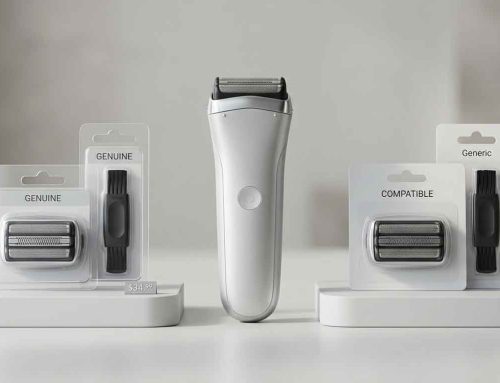
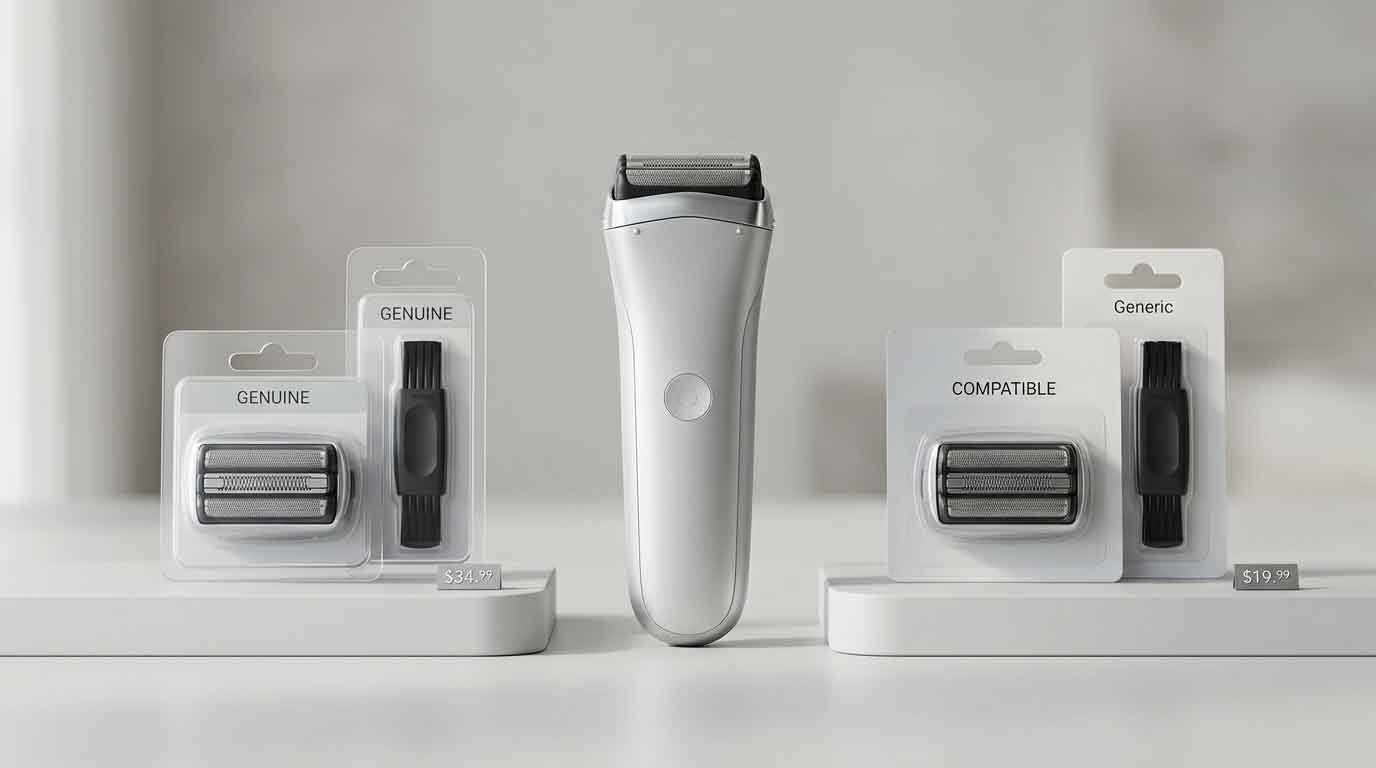
Genuine Parts Versus Compatible Stock
The term OEM, Original Equipment Manufacturer, describes parts produced to the same specifications as those used in the original device. Unlike aftermarket wares, OEM describes specific parts built for the original item, often as a copy of the one used during the manufacturing process. For electric shavers, that matters considerably more than it does for a simple commodity item. A shaver foil is a precision component. The factory tolerances between the cutters and the protective guards are measured in microns. A generic foil manufactured without access to the brand’s engineering data can miss those tolerances at the point of production and still look correct in the box, with the failure only becoming apparent once the customer shaves with it.
In my experience, the defect almost never shows up on inspection; it shows up in a one-star review three weeks after the sale.
Genuine parts are engineered to the tolerances of your specific shaver. In practice, genuine OEM cassettes produce a noticeably smoother result out of the box, particularly on more advanced models like the Series 7 and 9 where the foil geometry is more complex. That difference in geometry is not cosmetic. It determines whether the inner cutter oscillates correctly against the foil surface, or whether it drags, heats up, and shortens the life of the motor.
The VAR Relationship and What It Means for Resellers
OEMs establish a long-term partnership with value-added resellers (VARs) so that someone else can handle the B2B transactions while they focus on marketing new products and components. The resellers will, in turn, market the OEM parts under their own brand name. This structure means that legitimate OEM parts reach resellers through verified channels with clear provenance. When a reseller sources outside those channels, from unverified marketplace sellers, grey-market distributors, or bulk import brokers with no brand authorisation; they lose that provenance entirely.
Pro Tip: Before placing any bulk order for shaver parts, ask your supplier a direct question: are these parts sourced directly from the brand or from an authorised UK distributor? A supplier who cannot answer that question clearly is not a supplier you want to build your stock around.
The Real Cost of Generic Stock for Resellers
Returns, Complaints, and the Margin Erosion Nobody Budgets For
Product quality matters here. A low-priced item that generates returns or complaints can cost more than it earns. This is the calculation that many resellers make incorrectly when comparing OEM parts prices against generic alternatives. The headline unit price of a generic foil may be 30% lower, but that difference evaporates the moment a customer returns it. On average, online sales had a 20.8% return rate across product categories, and parts that do not fit correctly or perform as expected generate returns at rates well above the average. A reseller operating on the thin margins typical of the wholesale distribution channel, Shopify’s 2026 wholesale vs retail analysis puts typical wholesale gross margins at 10% to 30%, cannot absorb excessive return rates without it becoming a structural problem.
The downstream effect is equally damaging. A customer who buys a shaver part from a reseller, fits it, and finds it pulls rather than cuts does not generally return to that reseller for the next replacement cycle. They go elsewhere, and they often leave a review that sends other customers elsewhere too.
Warranty, Safety, and the Liability Resellers Overlook
Counterfeit electrical goods and accessories can overheat, catch fire, or fail to meet basic safety standards, putting lives at risk. Shaver chargers and replacement batteries fall squarely into this category. The foil and cutter cassettes are less of a safety risk in this direct sense, but a generic charger that does not meet UK electrical safety standards creates a liability exposure for the reseller who sold it, and potentially for any platform or marketplace that listed it.
In 2021, the estimated value of imported counterfeit and pirated goods into the United Kingdom amounted to £7.1 billion, equivalent to 1.5% of total UK imports, with electronics and automotive spare parts particularly affected. That figure, drawn from the OECD’s 2024 report on trade in counterfeit products and the UK economy, makes clear that the problem is not confined to luxury goods or obvious fakes. Electronics accessories, a category that includes shaver chargers, replacement foils sold under brand-similar packaging, and compatible batteries, are firmly in scope.
Pro Tip: When reviewing a new supplier of bulk shaver parts, check for CE marking on electrical accessories and ask specifically whether chargers and batteries are independently tested to UK safety standards. Sourcing a charger that fails an electrical safety check exposes you to liability that no discount on the unit price will compensate for.

How Genuine OEM Parts Support Reseller Margins Long Term
The Repeat Purchase Dynamic
The UK razor market was valued at USD 747.4 million in 2024 and is projected to grow at a 4.1% CAGR through 2030. A significant share of that spend is on replacement parts and accessories rather than new devices, meaning retailers who stock parts alongside hardware are capturing a wider slice of that pie. This is the structural argument for stocking genuine parts at bulk: the replacement cycle is built into the product category. The recommended frequency of replacing foils and blades is typically every 12 to 18 months, depending on usage and skin sensitivity. A customer who owns a mid-range Braun or Philips shaver will need a replacement foil and cutter set at least once a year, and possibly twice. If that customer has a positive experience with the parts they bought from a given reseller, the next replacement cycle is a near-certain repeat sale.
Stocking genuine OEM parts means stocking parts that meet that standard and deliver on the first use. Stocking cheap generic alternatives means gambling that the part performs acceptably, and accepting the consequence when it does not.
Volume Pricing and the Specialist Supplier Advantage
I’ve found that resellers who commit to a single specialist supplier for their bulk shaver parts consistently do better than those who chase the cheapest unit price across multiple sources. The reason is straightforward: inconsistent stock, unexpected price changes, incomplete documentation, and delayed fulfilment can interrupt customer relationships and force resellers to source urgently at higher costs.
Electrospares.Net Ltd, operating through the specialist platform at shaver-spares.co.uk, positions itself precisely as that consistent, verified source for UK resellers who need genuine shaver replacement parts across major brands including Philips, Braun, Remington, and Panasonic. Genuine OEM parts also eliminate the tolerance issues that create customer complaints with generic alternatives.
These wholesale relationships are often long-term and account-based, meaning success depends on repeat orders, reliable fulfilment, and strong customer partnerships. The reseller who treats their bulk parts supplier as a long-term partner rather than an interchangeable price source builds a more stable, lower-friction business on both sides of the relationship.
Spotting the Difference: OEM vs Generic Stock in Practice
What Genuine Parts Look Like in the Box
Genuine OEM parts offer a guaranteed dimensional fit with your specific motor and blade set, meet manufacturer safety and material standards, restore full day-one cutting performance, preserve shaver warranty in most cases, and use foil thickness and perforation patterns engineered to match inner cutter speed. None of these qualities are visible on the outside of the box. A convincingly packaged generic part can appear identical to a genuine one at point of purchase. The difference becomes apparent in use, and that is what makes this a reseller problem, not just a consumer problem.
Practically, resellers should look for the following when evaluating a parts source:
- Original manufacturer part numbers printed on the packaging, verifiable against the brand’s own published parts database.
- Clear country of manufacture statements that align with where the brand produces genuine parts.
- Pricing that is plausible rather than dramatically below market rate. A dramatic discount is the single most reliable red flag.
- A supplier who can provide evidence of their relationship with the brand or an authorised UK distributor.
Where the Generic Market Falls Short
A worn or misaligned foil can lead to irritation, pulling, and poor shaving performance. Using genuine or high-quality compatible foils ensures consistent results and prevents long-term damage to your shaver’s motor and mechanism. This matters to resellers because the motor damage pathway is slow and invisible. A customer fits a generic foil, notices slightly degraded performance but accepts it, and six months later the shaver’s motor burns out under the additional load. The customer connects that outcome with the replacement part, and with the retailer who sold it.
Generic replacement heads are not genuine shaver heads. They may be 100% functional but cannot reach the same quality as genuine, and buyers should understand that before purchasing. That caveat is routinely absent from bulk listings aimed at resellers who may not investigate far enough to find it.
Pro Tip: Always request a sample unit from any new bulk parts supplier before committing to a larger order. Fit it to the relevant shaver model yourself, or ask a technical colleague to do so. If the cassette does not click into position cleanly or produces any resistance during the shave, reject the consignment.

Common Mistakes Resellers Make When Sourcing Bulk Shaver Parts
Treating All “Compatible” Labels as Equal
The word “compatible” on a shaver parts listing covers an enormous range of actual quality. At one end of that range sits a genuinely well-manufactured aftermarket part from an established supplier with documented testing. At the other end sits a part made to the loosest possible dimensional approximation of the original. Reputable compatible parts from established retailers can represent good value when genuine parts are discontinued or significantly more expensive. However, quality varies considerably between suppliers. Resellers who treat all compatible listings as equivalent are exposing themselves to the lower end of that range without realising it.
Prioritising Purchase Price Over Total Cost of Ownership
After years of watching resellers in the grooming category compare supplier pricing, the most persistent mistake is optimising for purchase price rather than for total cost. The total cost of a bulk shaver parts order includes not just the unit price, but the time and cost of handling complaints, processing returns, managing reputational damage on marketplaces and review platforms, and the opportunity cost of losing repeat customers to a competitor who stocked better parts. A 15% saving on the unit price of a generic foil looks very different once the first batch of complaints arrives.
Sourcing From Too Many Unverified Channels
The blame for counterfeit parts entering retail supply chains is often placed at the doorstep of independent distributors not authorised to buy directly from component manufacturers. Instead they purchase parts from excess inventories or other independent distributors. Resellers who replicate this pattern by buying from multiple low-cost, unverified online sources are taking the same risk that has caused significant problems in other electronics categories. Counterfeiters increasingly respond swiftly to consumer demand, advertising online and exploiting less scrutinised distribution channels. According to the OECD’s Mapping Global Trade in Fakes 2025 report, around 65% of seizures in 2020-21 involved small parcels and mail. That figure means the goods most likely to contain counterfeit or substandard parts are arriving through exactly the same small-parcel channels many resellers use for ad hoc sourcing.
Frequently Asked Questions
What is the difference between OEM and compatible shaver parts?
OEM parts are produced by or under licence from the original manufacturer to the same engineering specifications as the parts shipped with the device. Compatible parts are produced by third parties and designed to fit the same models, but without access to the manufacturer’s proprietary engineering data. OEM parts bear practically the same quality as the original, whereas generic brands offer less protection against damages and are prone to breakdowns. For resellers, the key practical difference is consistency: genuine OEM parts perform the same way every time, where generic parts vary considerably between batches and suppliers.
Why do resellers pay more for genuine parts if the margin is tighter?
The margin calculation for genuine OEM parts is not just about the unit price. It includes the avoided cost of returns, the value of repeat purchases from satisfied customers, and the protection of the reseller’s reputation. A low-priced item that generates returns or complaints can cost more than it earns. Resellers who have shifted from mixed generic sourcing to consistent genuine OEM stock typically report that the overall margin position improves once return-handling costs are factored out.
How often do shaver parts need replacing, and what does that mean for resellers?
Purchasing genuine factory replacements on a 12 to 18 month schedule is the only reliable way to maintain cutting efficiency. For a reseller, that cadence is a commercial advantage. Every shaver sold into a market creates a recurring replacement need on a predictable cycle. A reseller who holds the right genuine parts stock captures that repeat demand systematically. A reseller who has disappointed a customer with a defective generic part loses that cycle entirely.
How can resellers verify that a bulk parts supplier is selling genuine stock?
Ask directly whether the supplier is an authorised distributor for the brands they sell. Genuine parts should carry the correct manufacturer part numbers, match the packaging standards the brand uses in the UK market, and be available at pricing that reflects real wholesale rather than dramatically discounted grey-market rates. Always check for signs that a product may not be genuine, such as unusually low prices, poor packaging, or missing safety labels. A dramatic discount is the single most reliable red flag. Specialist resellers such as Electrospares.Net Ltd at shaver-spares.co.uk operate transparently in this space with a verifiable UK trading history.
Does using non-OEM shaver parts affect the customer’s product warranty?
In the UK context, the position is nuanced. Manufacturers cannot automatically void a warranty simply because a non-OEM part was used, but they may be able to deny a claim if they can demonstrate the aftermarket part caused the specific failure. Most OEM replacement parts carry their own limited warranty, separate from the device’s factory warranty, and installing an aftermarket part somewhere else does not automatically void your remaining coverage. For resellers, this creates a straightforward practical argument: selling genuine OEM parts removes any ambiguity about warranty position for the customer, which removes a common objection and supports the sale.
Sources
- Electric Shavers Market Size, Growth Outlook 2025-2034, GM Insights. Market size data for the global electric shaver category. https://www.gminsights.com/industry-analysis/electric-shavers-market
- UK Electric Shaver Market Size & Analysis, Next Move Strategy Consulting. UK market valuation and CAGR projections. https://www.nextmsc.com/report/uk-electric-shaver-market
- Braun vs Philips Shaver: Which Is Better, Shaving School. Engineering tolerances and foil replacement cadence. https://www.shavingschool.com/electric-shavers/braun-vs-philips-shaver/
- Trade in Counterfeit Products and the UK Economy, OECD Trade Policy Papers. UK counterfeit imports value and affected categories. OECD’s 2024 report on trade in counterfeit products and the UK economy
- Why Independent Grooming Retailers Are Switching to Electrospares for Bulk Shaver Parts, Electrospares.Net Ltd. UK grooming market growth data and reseller switching drivers. https://www.shaver-spares.co.uk/Article/Bulk-Shaver-Parts-for-Retailers-Electrospares
- Generic vs Genuine Shaver Foils: Worth Buying?, Electrospares.Net Ltd. OEM foil pros, cons, and performance comparison. https://www.shaver-spares.co.uk/Article/Generic-vs-Genuine-Shaver-Foils
- Genuine vs Counterfeit Shaver Parts: Hidden Costs, Electrospares.Net Ltd. Consumer research on counterfeit purchases and red flags. https://www.shaver-spares.co.uk/Article/Genuine-Counterfeit-have-Parts-Hidden-Costs
- Compatible Shaver Heads vs Genuine OEM Parts: What the Difference Costs You, Electrospares.Net Ltd. National Trading Standards and OECD data on counterfeit goods. https://www.shaver-spares.co.uk/Article/Compatible-vs-Genuine-Shaver-Heads-True-Cost
- How to Choose the Right Braun Foil and Cutter for Your Model, Electrospares.Net Ltd. OEM versus compatible parts performance comparison. https://www.shaver-spares.co.uk/Article/Braun-Foil-and-Cutter-Guide
- OEM vs OE: What’s the Difference?, Metalphoto of Cincinnati. OEM definition and VAR partnership model. https://mpofcinci.com/blog/oem-vs-oe-whats-the-difference/
- Wholesale vs Retail, Salesforce. B2B wholesale relationship dynamics. https://www.salesforce.com/retail/wholesale-vs-retail/
- Wholesale vs Retail: Key Differences (2026), Shopify. Gross margin benchmarks for wholesale distributors. https://www.shopify.com/blog/wholesale-vs-retail
- Best Products for Reseller Margins in Wholesale, Fakhruddin General Trading. Supply chain reliability and margin protection. Supply chain reliability and margin protection: Across Europe (including the UK), gross margins in retail typically range from about 16% to 42%, with wholesale categories such as beauty products (50-80% margins) and clothing (40-60% margins) offering particularly strong returns for resellers, according to retail profit margin data.
- Swelling Returns Force Retailers to Rethink the Shopping Experience, eMarketer. Online return rate benchmarks by product category. https://contentstorage-na1.emarketer.com/7c2b3262ee90cd1578a9c48773d33027/Swelling_returns_force_retailers_to_rethink_the_shopping_experience_eMarketer.pdf
- Remington Foil Shaver Replacement Screens and Cutter Blades, Shavers and Replacement Parts. Manufacturer replacement cycle recommendations. https://www.shavers-and-replacement-parts.com/remington-foil-shaver-replacement-screens-and-cutter-blades.html
- Buyers Share the Blame for Counterfeit Parts, Supply Chain Connect. Independent distributor risk and counterfeit parts sourcing. https://www.supplychainconnect.com/counterfeit/article/21865950/buyers-share-the-blame-for-counterfeit-parts
- Mapping Global Trade in Fakes 2025, OECD. Small parcel distribution of counterfeit goods and enforcement data. OECD/EUIPO Mapping Global Trade in Fakes 2025 report
- Does OEM Parts Warranty Coverage Protect You After a Repair?, RPM Warranty. OEM parts warranty terms and consumer protection context. https://blog.rpmwarranty.com/blog/oem-parts-warranty-coverage